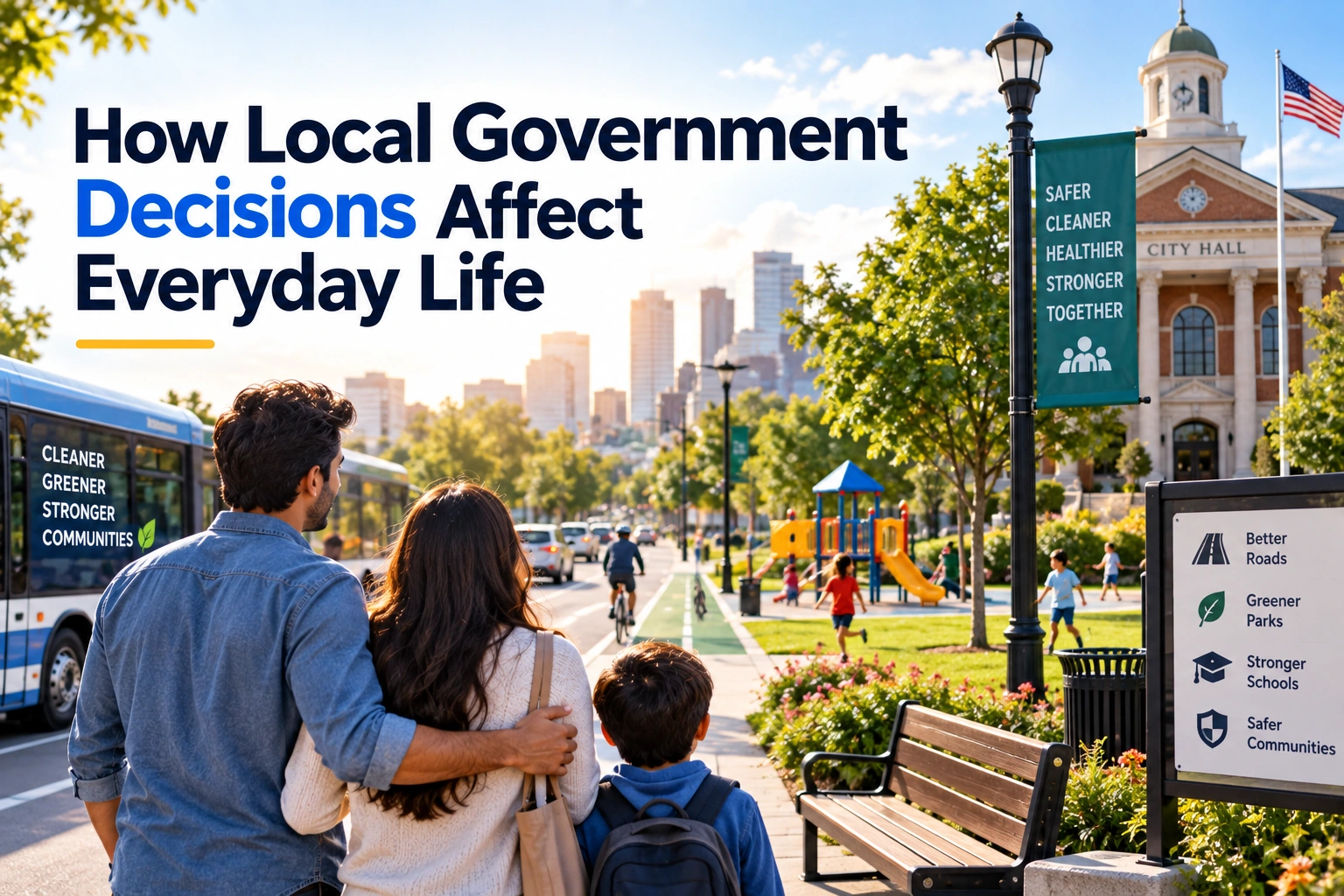
When people think about government, they often focus on national policies, elections, and major political decisions. However, many of the issues people experience every day are influenced by local government. From the condition of roads to waste collection, water supply, public spaces, sanitation, and local planning, decisions made by municipalities and other urban local bodies can have a direct effect on daily life.
In India, urban local bodies are responsible for a range of community services and interact with residents on many everyday civic matters. Government resources describe municipal responsibilities as including areas such as roads, water supply, sewerage, sanitation, street lighting, and solid waste management.
Roads and Local Transportation
One of the most visible effects of local government decisions can be seen in roads and transportation infrastructure. Decisions about road construction, maintenance, drainage, footpaths, parking arrangements, and traffic-related infrastructure can influence how easily residents travel around their communities.
A well-maintained road can make daily commuting more convenient, while damaged roads or poor drainage can create difficulties, particularly during periods of heavy rainfall. Local planning decisions can also affect pedestrian access and the development of public spaces.
Transportation planning is therefore not simply about moving vehicles. It can influence how residents reach workplaces, schools, markets, healthcare facilities, and other essential services.
Water Supply and Sanitation
Access to reliable water and sanitation is another important area of local governance. Municipal systems may be involved in water distribution, drainage, sewerage, and sanitation services, depending on the responsibilities assigned within a particular state or local area.
These services directly affect household routines. Water availability can influence cooking, cleaning, bathing, and other daily activities. Effective drainage and sanitation also contribute to cleaner surroundings and better public hygiene.
Because responsibilities can differ between jurisdictions, residents may need to interact with different agencies depending on the service involved.
Waste Management
Waste collection is another local service that people encounter regularly. Decisions regarding collection schedules, waste segregation, transportation, processing, and disposal can influence the cleanliness of residential areas.
Some local bodies encourage residents to separate different categories of waste. Such systems require cooperation between authorities, waste workers, businesses, and households.
When residents understand local waste-management rules and follow collection requirements, it can make municipal systems more effective.
Street Lighting and Public Spaces
Street lighting can affect how public areas are used after dark. Parks, community spaces, footpaths, and other public facilities also form part of the local environment.
Decisions about maintaining parks, improving public areas, installing lighting, or creating recreational facilities can influence how residents spend time in their neighborhoods.
Well-planned public spaces can provide places for walking, exercise, recreation, and community interaction.
Town Planning and Development
Local government decisions can also shape how neighborhoods develop. Planning regulations influence the use of land and the development of residential, commercial, and public areas.
For example, decisions concerning building permissions, zoning, infrastructure expansion, parking, and development standards can influence the character of a neighborhood over time.
Urban planning can also affect property development and the availability of infrastructure. When new residential or commercial areas develop, local authorities may need to plan for additional roads, water services, sanitation, waste management, and other facilities.
Local Taxes and Fees
Government services require funding, and local bodies may receive revenue through sources such as taxes, fees, grants, and other transfers. Property taxation is one example of a municipal revenue source, although the precise taxation powers and systems vary by state and local law.
Changes in applicable local taxes or service charges can therefore affect household budgets and businesses. At the same time, municipal revenue is connected to the ability of local bodies to provide and maintain public services.
Understanding where local revenue comes from can help residents better understand the financial side of civic administration.
Public Health and Community Well-Being
Local decisions can also influence public health indirectly through sanitation, waste management, drainage, environmental management, and cleanliness.
For example, effective waste collection and drainage can help maintain cleaner surroundings. Local authorities may also participate in community-level health and sanitation initiatives, depending on their assigned responsibilities.
These services may not always attract attention when they work properly, but their absence can become immediately noticeable.
Why Citizen Participation Matters
Local government is closely connected to residents because many municipal services affect everyday routines. Citizens can contribute by reporting civic problems through appropriate channels, following local regulations, participating in community initiatives, and staying informed about local decisions.
Many urban local bodies also operate grievance-redressal systems through which residents can report problems involving services such as roads, sanitation, water, or waste management.
Everyday Life and Local Governance
Local government decisions may not always make national headlines, but they can have a practical effect on daily life. The road outside a home, the collection of household waste, the availability of water, the condition of public spaces, and the way a neighborhood develops are all connected to local administration.
Understanding local government can therefore help residents recognize how civic decisions affect their communities and where they can seek information or raise concerns.
Effective local governance involves more than government action alone. It also depends on residents, businesses, community organizations, and other stakeholders working within the systems established for their communities. When citizens understand these responsibilities and participate constructively, everyday civic issues can receive greater attention and accountability.